Toddler bedtime can feel unpredictable — one night they drift off easily, the next they’re wide awake and full of energy. If your evenings feel chaotic, you’re not alone. The good news? With the right bedtime routine, environment, and habits, toddlers can learn to fall asleep faster, stay asleep longer, and wake up happier.

Toddler sleep is essential for healthy growth, emotional regulation, memory development, and overall behavior. Research from pediatric sleep experts shows that toddlers aged 1–3 years need between 11–14 hours of total sleep per day, including naps.
Quality sleep helps toddlers:
For parents, a consistent bedtime routine also reduces stress and creates a calmer home environment.
This is one of the most common issues for 1–3-year-olds. Toddlers push boundaries as part of normal development, which often extends to bedtime.
What Helps:
Make bedtime a breeze! Discover our Calm Bedtimes System and create peaceful, consistent nights for your toddler.
Many toddlers still wake during the night due to overtiredness, separation anxiety, or inconsistent routines.
What Helps:
Nighttime fears? Learn gentle strategies to help your toddler sleep soundly — even after scary dreams.
Screens, loud play, sugary snacks, and unpredictable evenings can delay melatonin release.
What Helps:
Transform bedtime into a calm, relaxing experience for both you and your child with simple meditation techniques.
A consistent bedtime routine can reduce bedtime struggles by up to 50% according to pediatric sleep studies. Here’s a simple, evidence-based framework:
Activities like coloring, puzzles, or gentle play; avoid screens.
A warm bath helps trigger a drop in body temperature — a natural cue for sleep.
Brush teeth, change into cozy pajamas, use the bathroom (if potty training).
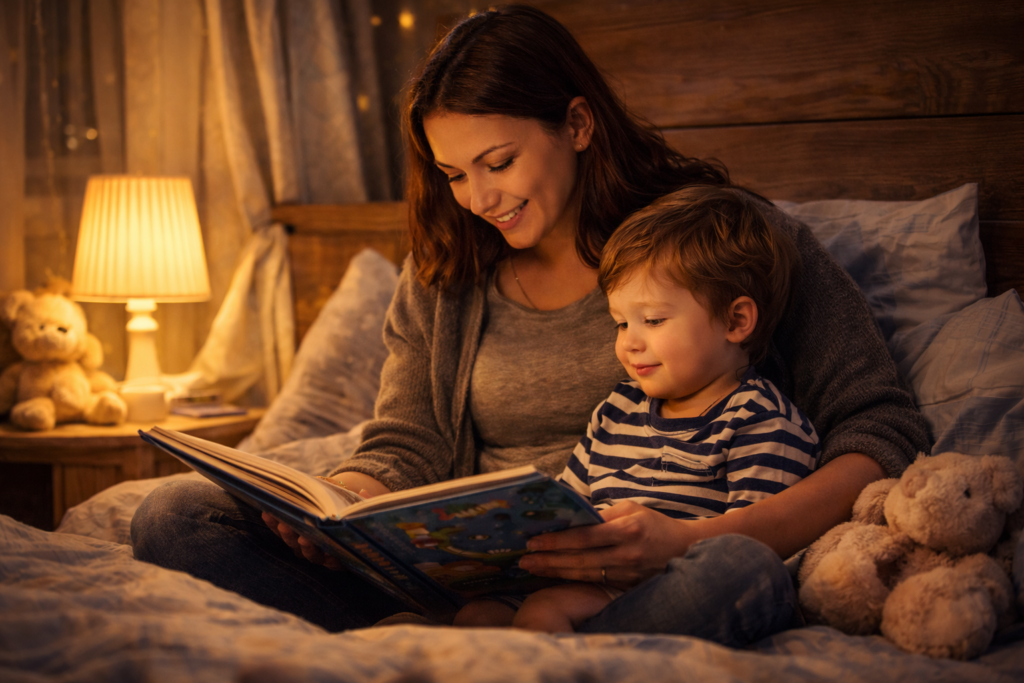
Books help toddlers unwind, and calm music supports emotional regulation.
✔ Step 5 — Lights Down + Sleep Cues
Dim lighting and white noise help signal the brain that it’s time to sleep.
A toddler’s bedroom should encourage comfort, security, and sleep. Here are key factors:
Use blackout curtains to reduce external light and maintain a sleep-friendly atmosphere.
White noise machines reduce nighttime disruptions from external sounds.
Opt for breathable bedding, soft textures, and avoid oversized pillows.
Experts recommend 68–72°F (20–22°C) for optimal toddler sleep
Toddlers need active play to release energy and build healthy sleep rhythms.
Skipping naps often leads to bedtime battles, not easier sleep.
Avoid sugary snacks or heavy meals too close to bedtime.
Support your child’s emotional growth and build confidence with strategies that make bedtime easier and stress-free.
If bedtime takes more than an hour regularly, or your toddler wakes multiple times per night despite consistent routines, expert guidance may help. Reputable sleep organizations offer parent resources and developmental insights.
Toddler bedtime doesn’t have to be stressful. With predictable routines, a calming sleep environment, and healthy daily habits, toddlers can learn to fall asleep faster and stay asleep longer.
Hi there to all, for the reason that I am genuinely keen of reading this website’s post to be updated on a regular basis. It carries pleasant stuff.
Pretty! This has been a really wonderful post. Many thanks for providing these details.

Leave a comment