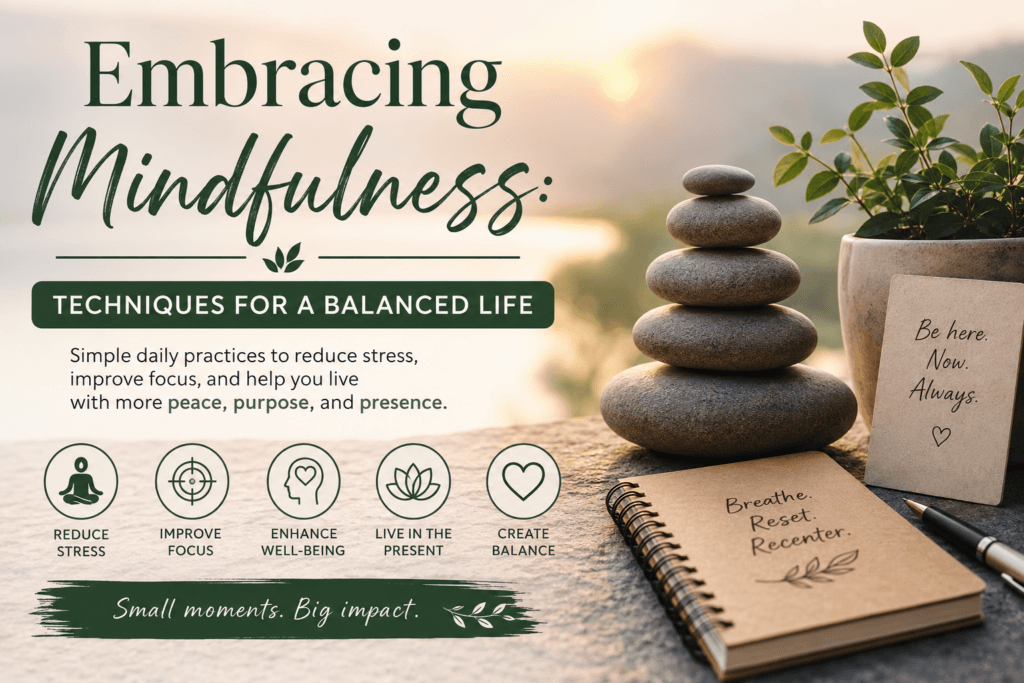
In our busy lives, meals often become another task to complete rather than an experience to enjoy. Embracing Mindfulness: Techniques for a Balanced Life can help you reconnect with the present moment and foster a deeper awareness during daily routines. Many people eat while watching television, scrolling through social media, or answering emails, making it easy to overlook the body’s natural hunger and fullness cues.
Mindful eating encourages you to slow down and fully engage with your meal.
Instead of rushing, take time to notice:
Eating more mindfully can help improve digestion, reduce overeating, and increase appreciation for nutritious foods. Even dedicating one meal each day to mindful eating can make a noticeable difference over time.
Walking is something many of us do every day without much thought. By turning a simple walk into a mindfulness exercise, you can transform an ordinary activity into a calming practice.
Whether you’re walking through a park, around your neighborhood, or even inside your workplace, pay attention to:
If your thoughts begin to wander, gently return your focus to your surroundings. Even a ten-minute mindful walk can help clear your mind and reduce stress.
Technology keeps us connected, but constant notifications can make it difficult to stay present.
Digital mindfulness means becoming intentional about how and when you use technology instead of allowing it to control your attention.
Consider these habits:
Reducing digital distractions creates more opportunities to connect with yourself, your family, and your surroundings.
Writing down your thoughts is an effective way to develop greater self-awareness.
A mindfulness journal doesn’t need to be lengthy. Spending just five minutes each day reflecting on your experiences can help you recognize emotional patterns, celebrate progress, and process difficult situations.
You might write about:
Over time, journaling can become a valuable record of personal growth and emotional resilience.
Gratitude and mindfulness naturally complement one another.
Rather than focusing on what is missing, gratitude encourages you to notice the positive aspects of your life—even during difficult times.
Simple gratitude practices include:
Research suggests that regularly practicing gratitude may contribute to greater happiness, stronger relationships, and improved emotional well-being.
One of the biggest misconceptions about mindfulness is that it requires large amounts of free time. In reality, consistency matters far more than duration.
Here is an example of a simple daily routine:
Small daily habits often produce greater long-term results than occasional lengthy meditation sessions.
Mindfulness is a skill that develops with practice. Beginners sometimes become discouraged because they expect immediate perfection.
Remember these common misconceptions:
Thoughts will naturally arise. The goal isn’t to stop thinking but to notice your thoughts without becoming attached to them.
Practicing for five minutes every day is often more beneficial than meditating for an hour once a month.
Mindfulness looks different for everyone. Some people enjoy meditation, while others prefer walking, journaling, gardening, or simply paying closer attention during everyday activities.
Like any new habit, mindfulness takes time to develop. Celebrate small improvements rather than expecting instant transformation.
Even five to ten minutes each day can provide meaningful benefits. As the habit becomes more comfortable, you may naturally choose to practice for longer periods.
Many people find mindfulness helpful for managing everyday stress because it encourages a calm, present-focused mindset. While it isn’t a cure for stress, it can be a valuable tool alongside other healthy coping strategies.
No. Meditation is one way to practice mindfulness, but activities like walking, journaling, deep breathing, eating mindfully, and even household chores can all be practiced with mindful attention.
Yes. Simple breathing exercises, gratitude activities, and mindful play can help children develop emotional awareness and healthy coping skills.
Some people feel calmer after a single session, while others notice gradual improvements over several weeks of consistent practice. The key is building mindfulness into your daily routine.
Mindfulness isn’t about achieving perfection or eliminating life’s challenges. It’s about learning to approach each moment with greater awareness, curiosity, and compassion.
By incorporating small practices like mindful breathing, walking, journaling, gratitude, and intentional use of technology, you can gradually build habits that support a calmer mind and a more balanced life.
Remember, every mindful moment matters. Progress comes from consistency rather than perfection. Each pause you take to reconnect with the present is an investment in your mental, emotional, and physical well-being.
Whether you’re just beginning your mindfulness journey or looking to deepen an existing practice, the techniques in this guide can help you create more peace, focus, and balance in everyday life.
If you’re ready to make mindfulness a lasting part of your life, Serendel offers a growing collection of digital resources designed to support your personal growth and well-being.
Explore our collection of:
Discover practical tools that can help you reduce stress, build healthier habits, and create a more balanced, fulfilling life—one mindful step at a time.

Leave a comment