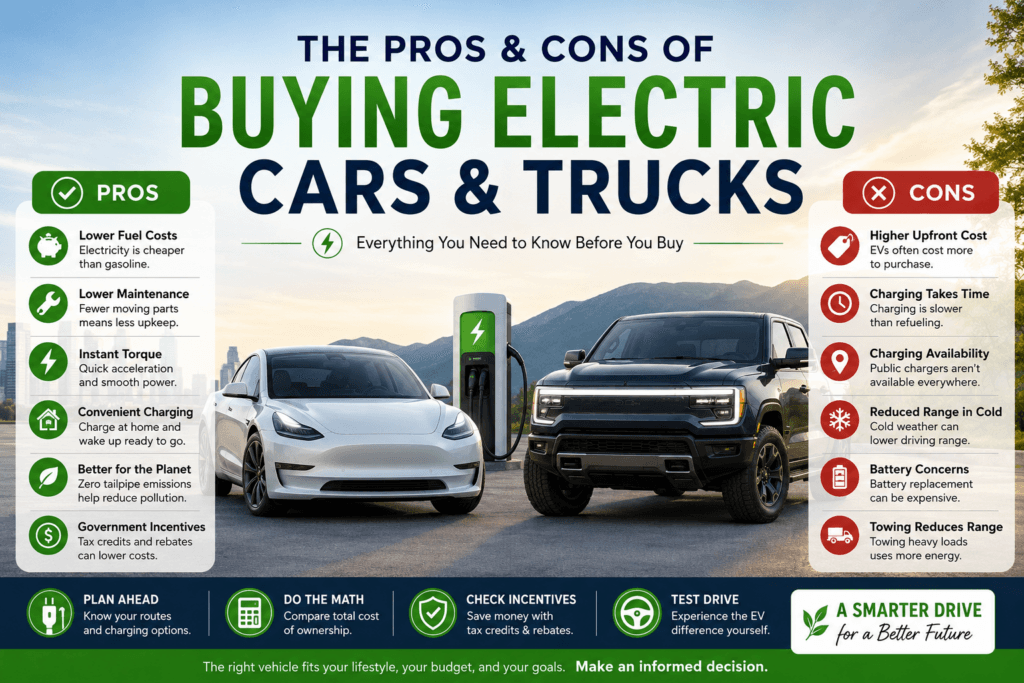
Electric vehicles (EVs) have moved from a niche market to a mainstream option for drivers around the world. Automakers continue introducing new electric cars, SUVs, and pickup trucks with longer driving ranges, improved technology, and faster charging capabilities. As governments invest in charging infrastructure and many consumers look for ways to reduce fuel costs, interest in EV ownership continues to grow.
But despite their popularity, electric vehicles aren’t the perfect solution for everyone.
The right choice depends on your driving habits, budget, access to charging, climate, and lifestyle. While many owners enjoy lower operating costs and a quieter driving experience, others may find that charging availability, towing range, or upfront purchase prices don’t fit their needs.
This guide explores both the advantages and disadvantages of buying an electric car or truck so you can make an informed decision before purchasing your next vehicle.
An electric vehicle uses one or more electric motors powered by a rechargeable battery pack instead of a traditional gasoline or diesel engine.
There are several types of electric vehicles:
These vehicles run entirely on electricity and produce no tailpipe emissions. They must be charged using home or public charging stations.
Examples include:
These vehicles combine an electric motor with a gasoline engine. They can drive short distances using electricity before switching to fuel.
Traditional hybrids charge their batteries while driving and do not plug into external charging stations.
Understanding these differences is important because each type offers different ownership experiences and operating costs.
One of the biggest reasons people switch to electric vehicles is the potential to reduce fuel expenses.
Charging an EV at home is often less expensive than filling a gasoline tank, particularly if you can charge overnight when electricity rates may be lower in some areas.
Your actual savings depend on:
Drivers with long daily commutes often notice the greatest savings over time.
Electric vehicles have far fewer moving parts than traditional gasoline vehicles.
Without components like:
owners typically spend less on routine maintenance.
You’ll still need regular maintenance for:
Regenerative braking also helps many EV owners go longer between brake service because the electric motor assists with slowing the vehicle.
One of the first things new EV owners notice is how quickly electric vehicles accelerate.
Unlike gasoline engines that build power gradually, electric motors deliver maximum torque almost instantly.
Benefits include:
Even many affordable electric vehicles feel surprisingly quick compared to similarly priced gasoline models.
Imagine waking up each morning with a “full tank.”
Instead of stopping at a gas station every week, many EV owners simply plug in their vehicle overnight at home.
For drivers with garages or dedicated parking, this convenience quickly becomes one of the biggest advantages of EV ownership.
Level 2 home chargers can significantly reduce charging times compared to a standard household outlet.
Electric vehicles produce no tailpipe emissions while driving.
Although electricity generation and battery manufacturing still have environmental impacts, many studies suggest EVs produce fewer lifetime greenhouse gas emissions than comparable gasoline vehicles, particularly as electric grids incorporate more renewable energy sources.
This makes EVs an attractive option for environmentally conscious drivers.
Electric motors operate with very little noise.
Without engine vibration, many drivers describe EVs as relaxing and enjoyable for commuting.
Reduced cabin noise can also make conversations easier and improve long-distance comfort.
Depending on where you live, purchasing a new electric vehicle may qualify you for tax credits, rebates, or other financial incentives. Eligibility, vehicle requirements, and program availability vary by country, province/state, and can change over time, so it’s important to verify current programs before buying.
These incentives can help reduce the upfront purchase price and make EV ownership more affordable for some buyers.
Although prices continue to fall and more affordable models are entering the market, many electric vehicles still cost more upfront than comparable gasoline-powered vehicles.
However, lower operating and maintenance costs may offset part of this difference over several years of ownership.
When comparing vehicles, consider the total cost of ownership, not just the purchase price.
One of the biggest adjustments for new EV owners is charging time.
While filling a gasoline vehicle typically takes only a few minutes, charging an electric vehicle may take anywhere from about 20 minutes at some high-speed DC fast chargers (to add a substantial amount of range) to several hours on Level 2 home chargers, depending on the vehicle, battery size, and charging conditions.
Planning ahead becomes more important for longer trips.
Charging networks continue to expand, but coverage varies significantly by region.
Urban areas often have many charging options, while rural or remote locations may have fewer stations.
Before purchasing an EV, consider:
Reliable access to charging is one of the most important factors in deciding whether an EV fits your lifestyle.
One of the most common concerns about buying an electric vehicle is battery longevity.
Fortunately, modern EV batteries are designed to last much longer than many people expect. Most manufacturers provide battery warranties of 8 years or 100,000 miles (160,000 km) or more, and many batteries continue performing well beyond the warranty period.
Like all rechargeable batteries, EV batteries gradually lose some capacity over time. However, this degradation is typically slow and doesn’t mean the battery suddenly stops working.
Several factors influence battery life, including:
Battery replacement can be expensive if it’s needed outside the warranty period, but replacement is relatively uncommon for newer EVs. Before purchasing, review the manufacturer’s battery warranty and ask how battery health is monitored.
If you live in a region with cold winters, it’s important to understand how temperature affects electric vehicles.
Low temperatures can temporarily reduce battery efficiency, which may decrease available driving range. Using the cabin heater also draws power from the battery.
Many newer EVs include features that help reduce winter impacts, such as:
Simple habits can also help improve winter performance:
If you frequently drive long distances in extreme cold, compare winter range estimates before choosing a vehicle.
Electric pickup trucks are becoming increasingly capable, offering impressive acceleration, advanced technology, and strong towing capacity.
However, truck buyers should understand one important trade-off.
Pulling heavy trailers requires significantly more energy than everyday driving. Depending on factors such as trailer weight, terrain, speed, and weather, towing can substantially reduce an EV’s driving range.
If you tow frequently for work or recreation, consider:
For occasional towing, many electric trucks perform exceptionally well. For constant long-distance towing, carefully compare real-world performance before making a purchase.
Insurance premiums vary based on many factors, including:
Because some electric vehicles have higher purchase prices and specialized components, insurance costs may be higher than comparable gasoline vehicles in certain situations.
Before purchasing, request insurance quotes for several models to understand the full cost of ownership.
The resale market for electric vehicles continues to mature.
Factors that influence resale value include:
As EV adoption grows and battery technology improves, resale trends will likely continue to change. Research current market values if resale is an important factor in your buying decision.
An electric car or truck can be an excellent choice for many drivers—but it isn’t the perfect fit for everyone.
✔ Drive predictable daily distances.
✔ Have convenient access to home charging.
✔ Want lower routine maintenance costs.
✔ Prefer a quiet, comfortable driving experience.
✔ Want to reduce gasoline use.
✔ Enjoy modern technology and driver-assistance features.
Before signing a purchase agreement, take time to research and compare your options.
Here are a few practical tips:
The more preparation you do before buying, the more confident you’ll feel in your decision.
They can be. While purchase prices are often higher, many owners spend less on fuel and routine maintenance over the life of the vehicle.
Most modern EV batteries are designed to last many years, and manufacturers commonly provide warranties of at least 8 years or 100,000 miles (160,000 km). Actual battery life varies based on usage, climate, and vehicle design.
Yes. Many owners charge overnight using either a standard household outlet or a faster Level 2 home charger.
Yes, but towing generally reduces driving range. If you tow frequently or over long distances, compare real-world towing performance before purchasing.
Generally, yes. Electric vehicles don’t need oil changes and have fewer moving parts than gasoline vehicles, though they still require maintenance for items such as tires, brakes, suspension, and cabin air filters.
Electric cars and trucks have become practical options for many drivers thanks to improvements in battery technology, charging infrastructure, and vehicle selection. Lower maintenance needs, reduced fuel costs, and a smooth, quiet driving experience are all compelling advantages.
At the same time, factors such as charging access, purchase price, winter performance, and towing needs remain important considerations. The best vehicle is the one that aligns with your daily driving habits, budget, and long-term goals.
Rather than focusing on whether electric vehicles are universally “better,” consider how well they fit your specific lifestyle. Taking the time to research, compare models, and understand ownership costs will help you make a confident and informed decision.
Buying a vehicle is one of the largest financial decisions many people make. At Serendel, we’re committed to helping you make smarter, more informed choices.
Explore our growing collection of digital resources, including:
🚗 Electric Vehicle Buying Guide
🚙 First Electric Car Buyer’s Guide
💰 Budgeting & Saving Resources
📊 Planning Purchases Ahead Guide
🤖 AI-Powered Research & Decision-Making Guides
Whether you’re comparing electric, hybrid, or gasoline vehicles, our practical digital guides can help you evaluate your options with confidence.
To further research electric vehicles, these trusted organizations provide helpful information:
To learn more about electric vehicles, charging, and incentives, these organizations provide trustworthy information:

Leave a comment