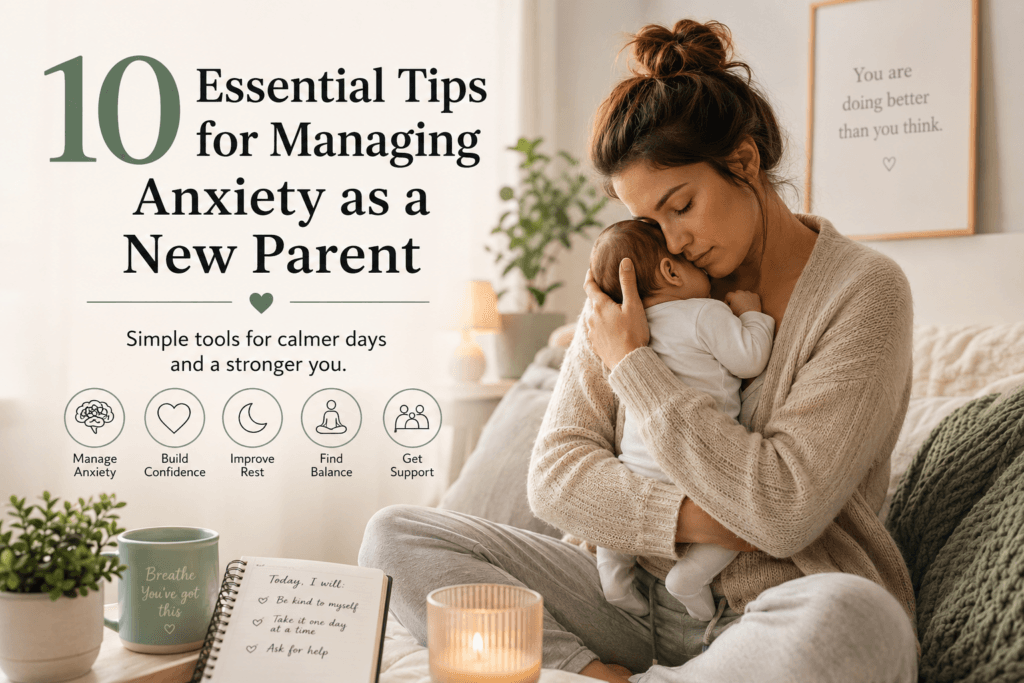
An Educational Guide for Calm, Confidence, and Emotional Balance
Becoming a parent is one of the most meaningful life transitions—but it can also bring unexpected waves of anxiety. Between sleep deprivation, constant responsibility, and the pressure to “do everything right,” it’s normal for new parents to feel overwhelmed at times.
The good news: anxiety in early parenthood is common, manageable, and highly responsive to simple, consistent strategies.
This guide breaks down 10 essential, practical tips for managing anxiety as a new parent, along with trusted mental health resources and gentle, evidence-based approaches you can start using right away.
Many new parents experience heightened worry, racing thoughts, or physical tension. This is often linked to hormonal changes, sleep disruption, and the emotional weight of caring for a newborn.
Organizations like the American Psychological Association confirm that anxiety during life transitions—including parenthood—is a normal psychological response.
Learn more: American Psychological Association – Anxiety Basics
Key takeaway: Experiencing anxiety does not mean you’re doing something wrong—it means your mind is adjusting to a major life shift.
One of the biggest drivers of anxiety is perfectionism. New parents often feel pressure to meet unrealistic standards from social media, family expectations, or internal beliefs.
Instead, aim for “good enough” parenting:
Letting go of perfection reduces mental load and frees up emotional energy.
Sleep deprivation significantly increases anxiety sensitivity, emotional reactivity, and stress levels.
Even if full nights of sleep aren’t possible:
According to the CDC, sleep is directly linked to mental health and emotional regulation.
Read more: CDC – Sleep and Sleep Disorders
When anxiety spikes, grounding techniques can quickly bring your mind back to the present moment.
Try this simple method:
This helps interrupt spiraling thoughts and anchors you in your surroundings.
New parents often consume massive amounts of parenting advice, much of which is conflicting or fear-based.
To reduce anxiety:
Reliable health information can be found through NHS guidance:
NHS – Anxiety Disorders Overview
Newborn life rarely follows strict schedules. Instead of rigid planning, focus on flexible routines:
Predictable anchors reduce mental chaos without adding pressure.
Suppressing anxiety often makes it stronger. Talking helps regulate emotions and normalize the experience.
You can:
The Mayo Clinic highlights that verbalizing anxiety is an important coping strategy:
Mayo Clinic – Anxiety Disorders
Many new parents experience guilt when they feel anxious. But self-criticism actually intensifies stress.
Try shifting your inner dialogue:
Self-compassion improves emotional resilience and reduces anxiety intensity over time.
You don’t need intense workouts—light movement is enough to regulate stress hormones.
Options include:
Physical movement helps discharge built-up tension and improves mood stability.
If anxiety feels persistent, overwhelming, or interferes with daily functioning, professional support can make a significant difference.
Signs you may benefit from support:
You can explore resources through the World Health Organization:
WHO – Mental Health Overview
Reaching out is a sign of strength, not failure.
Managing anxiety as a new parent often comes down to creating small moments of calm, confidence, and routine throughout your day. One of the most grounding ways to reduce overwhelm is to feel more prepared in your daily caregiving tasks.
That’s exactly why the Newborn Care and Bathing Bundle— can help simplify essential routines and bring more ease into your early parenting experience.
Whether it’s bath time or daily care moments, having the right tools and guidance can reduce uncertainty and help you feel more in control, calm, and connected with your baby.
👉 Explore the Newborn Care and Bathing Bundle here
Managing anxiety as a new parent isn’t about eliminating stress completely—it’s about building tools that help you stay grounded through it.
Small, consistent actions like better rest, supportive conversations, reduced pressure, and mindful breathing can create meaningful shifts over time.
Parenthood is a learning process, and emotional ups and downs are part of that journey. You’re not expected to navigate it perfectly—just steadily, one day at a time.
Every family is different, and so are the challenges that come with raising kids. Discover more simple, supportive resources that help you build better routines, improve communication, and create a more balanced home life that actually works for you.
➡️ Explore Parenting Resources

Leave a comment